
BIONICS / THE BIOTOPE PRINCIPLE
Down to the last photon. An excursion through light, energy, water and the living systems that inspire BIOTOPE.
The biotope principle – like practically all my inventions – is based on the principle: “down to the last photon.”
Use of the entire spectrum of solar radiation incident on a surface in a cascade of beneficial effects.
This is a diametrically different approach from the usual strategy, which is based on gratefully using a certain part of the incoming solar energy, but considering another part as harmful and rejecting it with technical measures.
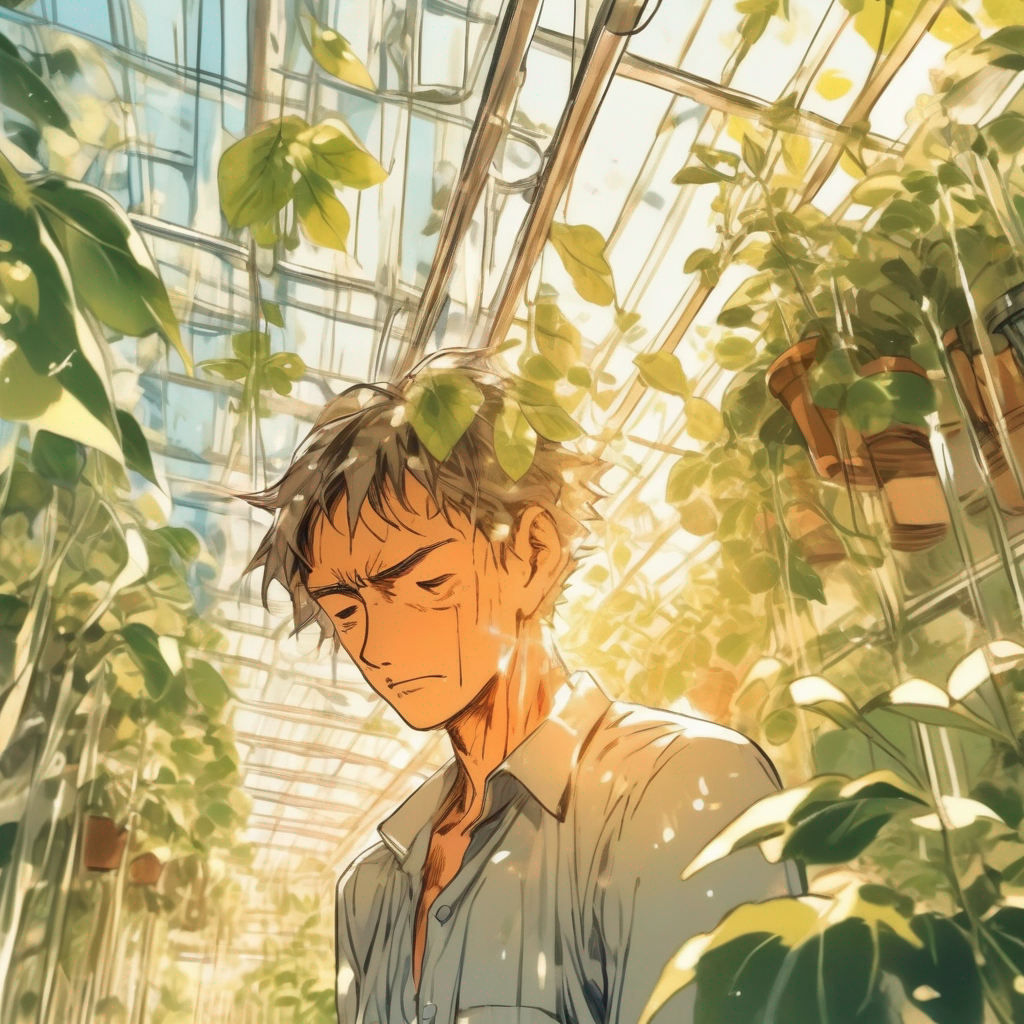
Example: A classic glass greenhouse: Summer, high air temperatures, the sun shining from a blue sky. Despite the open ventilation flaps, the air temperature inside rises to unbearable levels for both plants and people (plants and people have similar temperature comfort zones).
So the glass surface is covered with a lime solution or other light-repellent coating, which reflects approximately 60–70% of the incoming sunlight. It does get significantly cooler inside, just as it does when a cloud passes in front of the sun.
This is good for the photosynthetic plants inside, because their performance decreases significantly as the temperature rises.
Unfortunately, these layers also reduce the PAR (Photosynthetic Active Radiation) spectral component of sunlight, which is crucial for plant growth. Furthermore, up to 3 kWh of light per m²/day is returned unused to the ‘donor’ in the sky. For a greenhouse with approximately 50 m² of south-facing area, this is the equivalent of 120 kWh of free radiant energy.
The BIOTOPE®, on the other hand, accepts this gift of radiation and converts it into usable energy.
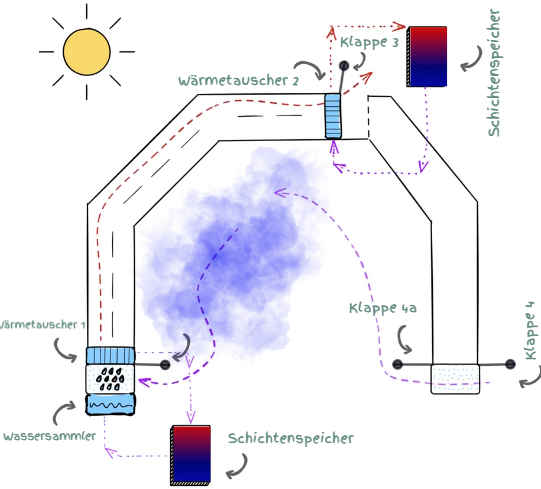
Especially if such a 10 m long BIOTOPE® were to be placed in the garden next to a residential building? The rotating slats inside the BIOTOPE® double-glazed windows fulfill a triple function during the day:
But let's continue, in keeping with the motto: “Down to the last photon”: the sunlight photons incident on the PV module generate electricity with approximately 20% efficiency; but what happens to the 80% not used for electricity generation?
In conventional photovoltaic modules, they generate heat, which heats the atmosphere with the air flow rising above the modules; and also reduces their conversion efficiency into electricity (negative temperature coefficient).
With the BIOTOPE®, this warm air flows upwards in a targeted manner through the double window, which acts as an updraft channel, thereby creating two additional beneficial effects:
In the example of the 50 m² BIOTOPE® in the garden, the BIOTOPE® fulfils two tasks as described so far:
Ideal plant habitat and energy center for the house.
In addition to PAR light, other parts of the sunlight spectrum also play an important, often overlooked, role in plant growth. First, the UV component of terrestrial sunlight. This is responsible for vitamin production, flavor, and color, and naturally disinfects the interior of the BIOTOPE®. The ETFE membranes surrounding the BIOTOPE® are highly transparent, even to UV light.
In stark contrast to traditional glass greenhouses, which block UV light. Anyone who has ever tasted fruit from a glass-covered greenhouse and, for comparison, the same variety from an ETFE-covered greenhouse will understand the differences. The captivating scent of the plants and their vibrant colors in the BIOTOPE® are also similar to those grown outdoors.
Since sunlight is the source of life for plants, those grown in a greenhouse might be associated with an ordinary soup kitchen, while those growing under ETFE might be associated with an exquisite multi-star restaurant.

Plants “know” the laws of quantum physics and apply them very elegantly. This has been the case long before humans existed. Even though they never attended university, earned degrees, or received Nobel Prizes. I say this half tongue-in-cheek, half seriously. The man-made “BIOTOPE®” envelops and serves something very subtle and precious—namely, living plants.
It's therefore important to understand their needs as well as possible so we can best meet them. The BIOTOPE® shell was conceptually inspired by an analogy from nature: the cell membrane that surrounds the precious interior of a living cell. This membrane is by no means a mere static protective covering. It interacts intelligently with changing environmental conditions, opening and closing “windows” into the interior for the benefit of the whole.
This “invention” of nature was one of the important prerequisites for the evolution of life.
But back to quantum physics. 48 light photons (quanta) are needed to synthesize one sugar molecule—the basis of life—in the fantastic, light-chemical “factory” of chlorophyll. The efficiency of this conversion is defined as follows:
Energy content 48 photons
Energy content of a sugar molecule.
Since the energy content of the sugar molecule is constant, the conversion efficiency will be higher the lower the energy of the 48 photons that cause it. Now we come to the color of the incoming light. As explained, the mechanism of photosynthesis requires very specific ranges from the total incoming spectrum, the PAR light. This is particularly energy-rich in the blue-green range (where green can hardly be used by photosynthesis) and correspondingly lower in energy in the subsequent yellow-red range.
According to quantum rules, only the number of photons involved, i.e. 48, is important for the task of “light to sugar,” not their energy content.
Conclusion: 48 yellow-red photons produce a sugar molecule with significantly higher efficiency than 48 blue-green ones.
Certain fluorescent pigments can absorb blue-green light and emit it as yellow-red light. We have incorporated such fluorescent pigments into membranes that, when placed at suitable locations within the BIOTOPE®, provide the plants with additional portions of their “favorite food,” thus contributing to increased, healthy growth.
(Small aside: The latter principle can certainly be significantly improved in future developments of the BIOTOPE® through optimized fluorescence mechanisms.)
Thinking pragmatically, we're simply accepting it as a useful additional feature at the current stage of development and focusing on the gradual optimization of the core functions. Thus, the beginning of a technical evolutionary chain.
But – very importantly – the current state of the art is already significantly superior to the current state of the art; therefore, we are initially implementing it in a small “do-it-yourself” configuration, bringing it to market, and using the financial returns to gradually develop further development steps and application areas, which I will briefly describe later in this paper.
But first, let's get back to the photons and the existing DIY configuration of the BIOTOPE®. As described, its multifunctional shell utilizes the incoming solar photons in a cascade of beneficial transformations, all of which serve the well-being of the plants and also benefit us humans.
It is useful to realize the enormous number of photons per second that fall on a surface perpendicular to the sun's rays: 3.1 × 10²¹ in full sunshine and 0.6 × 10²¹ under thick clouds!
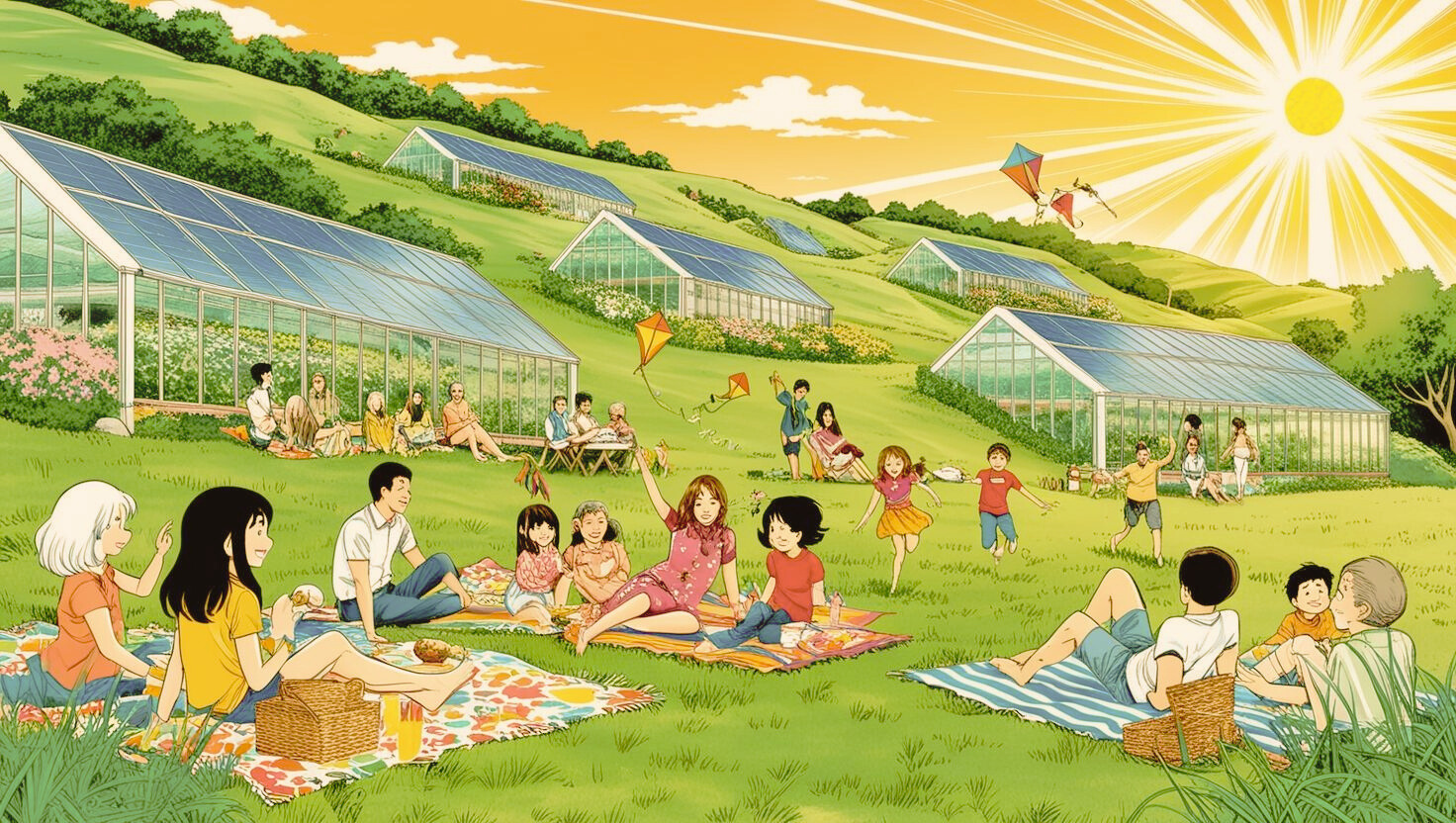
This helps us understand why the sun not only surpasses all terrestrial energy powerhouses by orders of magnitude, but also how much more ingenious and subtle the interaction between light and matter is than any previous human technology. This becomes particularly clear when we consider the miracle of photosynthesis. We owe our existence to it. Isn't it therefore logical and expedient that, as part of creation, we pursue developments like the BIOTOPE® in synergy with plants?
Up until now, we've been talking about solar photons. During the night, the BIOTOPE®'s shells themselves emit “cold photons” in the infrared range through the infrared window (between 8 and 14 micrometers in the spectral range) into space, which has a temperature of -273°C. They thereby transport energy into space. The effect: the radiating surfaces become cooler. I have therefore taken the liberty of somewhat casually calling these types of photons “cold photons.” Of course, nature has long utilized this principle: morning dew on the low surface temperature below the dew point caused by the “cold photon” radiation from grasses and plants. The BIOTOPE® uses this principle to reclaim the water evaporated by the plants within it during the day.
Due to the double-window topology of the BIOTOPE®'s outer shell, the cooled air falls through the ducts by gravity. There, before escaping to the outside, it passes through a suitable air-water heat exchanger. This heat exchanger fills a storage tank with cold water.
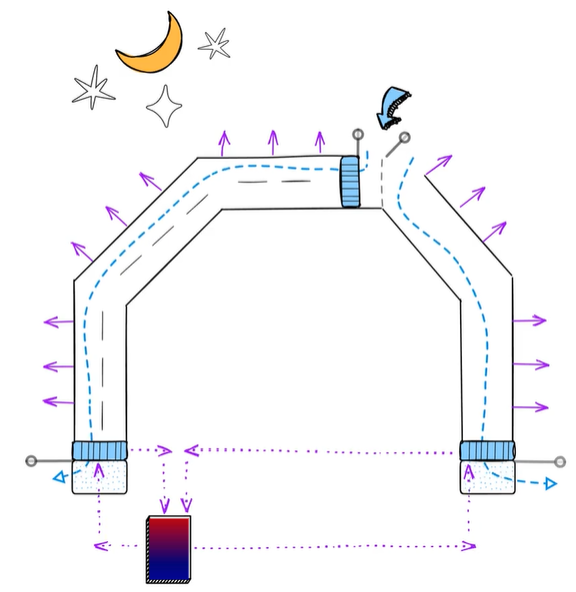
The following day, the ducts, now acting as updraft ducts, draw fresh, CO₂-rich air into the greenhouse, continuously displacing the CO₂-poor, water vapor-laden interior air of the BIOTOPE®, which is released into the outside via the updraft duct. At the lower end of the duct, this air flows through the aforementioned heat exchanger, which is cooled below the dew point of the outgoing air by the cold water generated during the night.
Effect: The water contained in the humid air is recovered and returned to the greenhouse.
One extremely significant effect is the water crisis, which is becoming increasingly severe in many regions of the world, caused by human-induced climate deregulation due to greenhouse gases.
Some figures should clarify this and also lead to a brief description of further applications of the BIOTOPE® principle:
| Diet | Approximate area |
|---|---|
| Omnivorous diet | 4,000–5,000 m² |
| Vegetarian diet | 2,000–3,000 m² |
| Vegan diet | 1,000–2,000 m² |
Meat production requires significantly more land, especially beef due to the feed requirements. A plant-based diet significantly reduces the land requirement.
Water requirements depend on the plants, the climate and the irrigation efficiency.
Worldwide average for irrigation: approx. 3–5 liters of water per m² per day (highly variable).
Extrapolated:
| Diet | Liters per day |
|---|---|
| Omnivorous diet | 12,000–25,000 |
| Vegetarian diet | 6,000–15,000 |
| Vegan diet | 3,000–10,000 |
It is important to realize that only about 1% of the water used to water plants is incorporated into the plant structures, i.e., remains there.
The remaining 99% is used to transport nutrients from the root area and ultimately to cool the plant through leaf evaporation.
In established greenhouses, water vapor is released into the atmosphere through large vents. The water content is recycled through global weather patterns, but almost never returns directly to its place of origin.
In this respect, the BIOTOPE® principle is also based on the natural cycle, but uses it with simple technological methods for a small, local water cycle.
But what does this actually mean? If a large portion of the water evaporated by the plants (ideally 99%) is reclaimed for the plants in a closed loop, it represents a dramatic reduction in the water requirements listed in the table above.
If we consider the 6,000–15,000 liters per day that every vegetarian consumes per day (!) just for their food (although most of us don't know this), then we realize that saving on showering or similar sensible measures to reduce water consumption are only marginal measures.
The main approach is to recycle the water evaporated by the plants.
What considerations does this lead to when considering future application potential of BIOTOPE®?
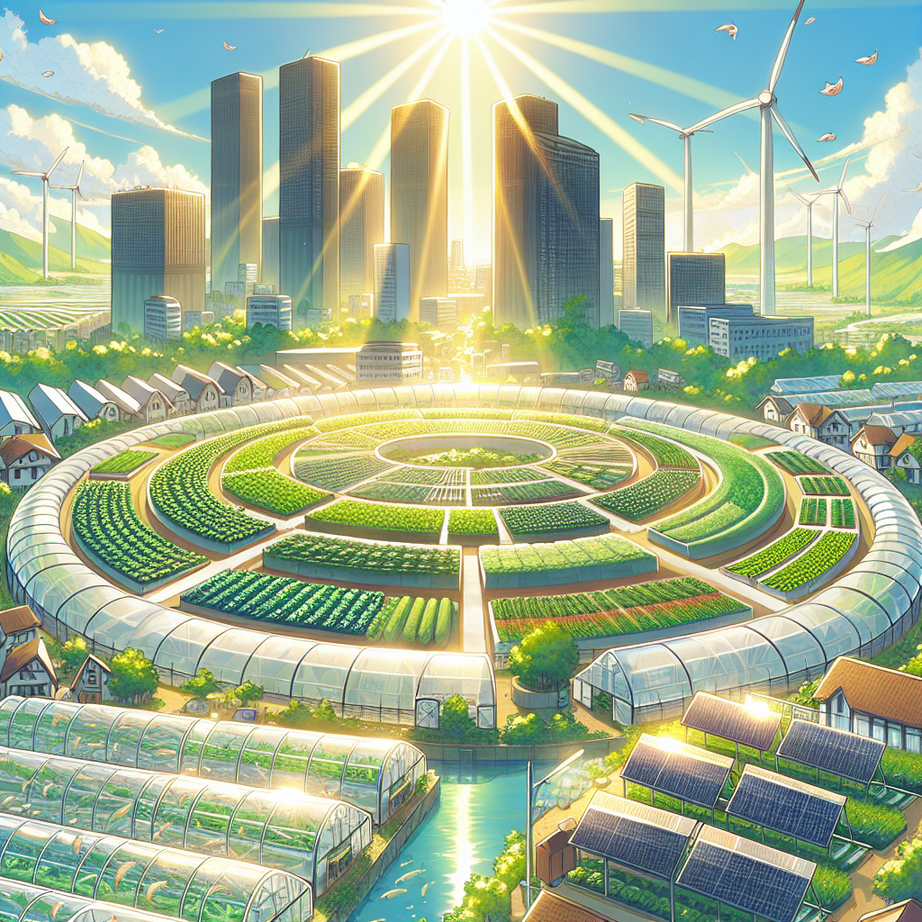
Let's imagine a city in the sunny south. Its residents need food and energy. The BIOTOPE® provides both. Let's imagine that the city is surrounded by a circular, concentric ring of BIOTOPE® greenhouses.
Now, energy and food can be delivered to consumers over a very short distance. Incidentally, animal proteins, if needed, can also be obtained from a fish farm integrated into the BIOTOPE®s. This is by no means a utopian vision. In our collaboration with the “Blue” organization of our research friends in Sydney, we were able to see that they have succeeded (albeit in a conventional, ‘energy-hungry’ commercial greenhouse of 5,000 m², with approximately 20 m² of space each), producing approximately 1 kg of tilapia fish and 1 kg of vegetables per day and selling them in local supermarkets). If you compare these 20 m² of space required for a daily human diet with the 4,000–5,000 m² for an omnivorous diet (plants + meat) stated in the list above, you will consider it unrealistic.
The key to solving the problem actually lies in providing affordable electrical and thermal energy for the greenhouses. The BIOTOPE® essentially provides both.
So you understand why it is my greatest dream to see such BIOTOPE enclosing cities and settlements emerge in the future.
Incidentally, the city not only benefits from the delivery of healthy food and energy over short distances.
In the wastewater treatment of these cities, the final, biological treatment stage represents a major cost factor. The plants in the greenhouse can, in principle, replace this, while simultaneously utilizing it for their growth.
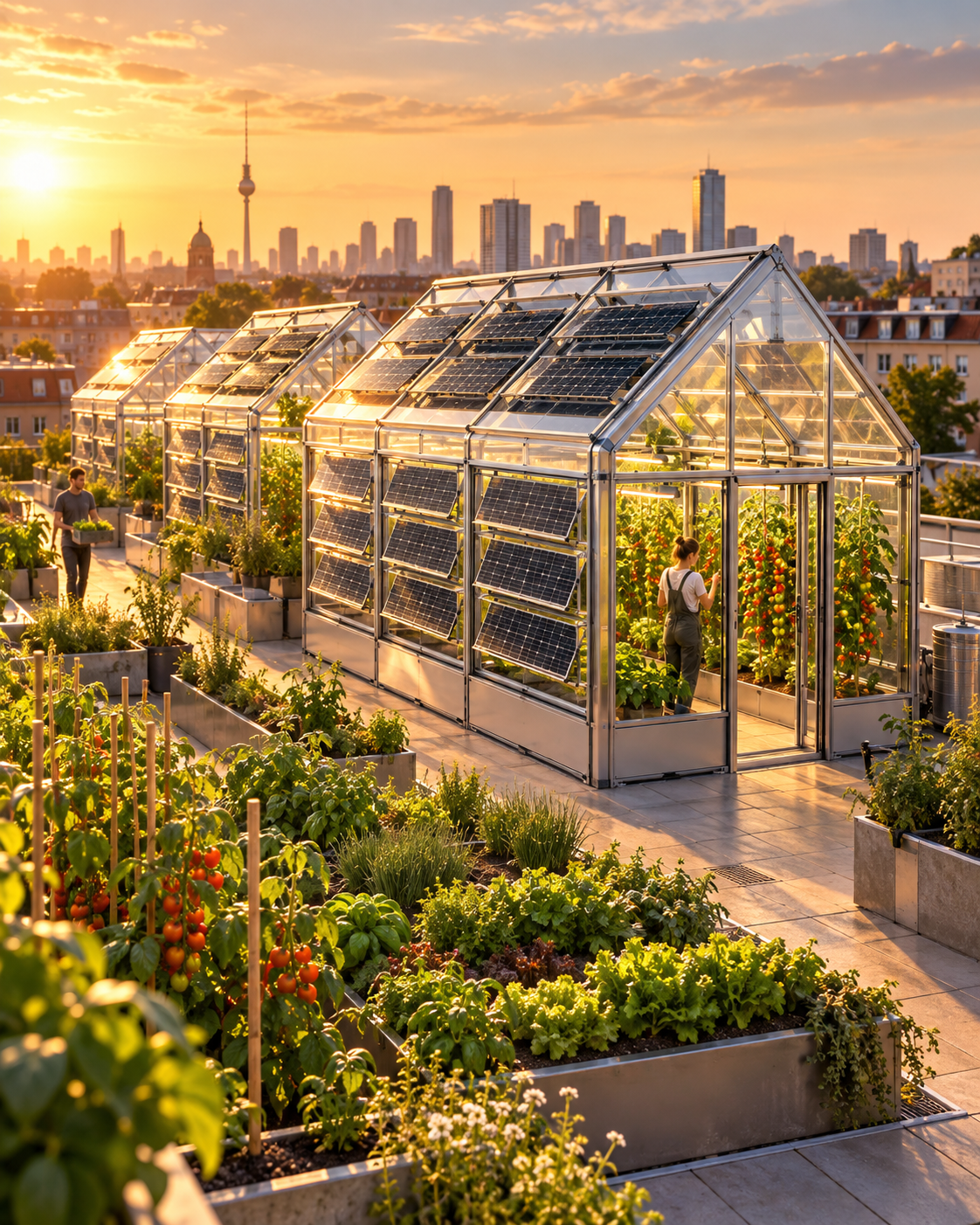
Now, as announced, a second, smaller future application of the BIOTOPE®. Its integration, typically as a flat roof structure or as a winter garden in residential buildings, allows energy and food to be used via the shortest possible route. A first, important step toward local solar autonomy.
Two more additional aspects. First, one for the “soul”: the inner area of the BIOTOPE® is also a wonderful recreational space for people. In the simplest case, you can “unwind” in a lounge chair, enjoying pleasant temperatures and light conditions, amidst a natural paradise. In the more advanced case, you can create a “house within a house” as a refuge within the BIOTOPE®.
The second aspect is more sobering: thanks to its extremely lightweight construction, the BIOTOPE® requires significantly less “grey energy” to manufacture, and thus significantly fewer greenhouse gases are released into the atmosphere than during the production of heavy, traditional greenhouses. This is an important objective, because developments like the BIOTOPE® ultimately aim for a much-needed carbon-free future.
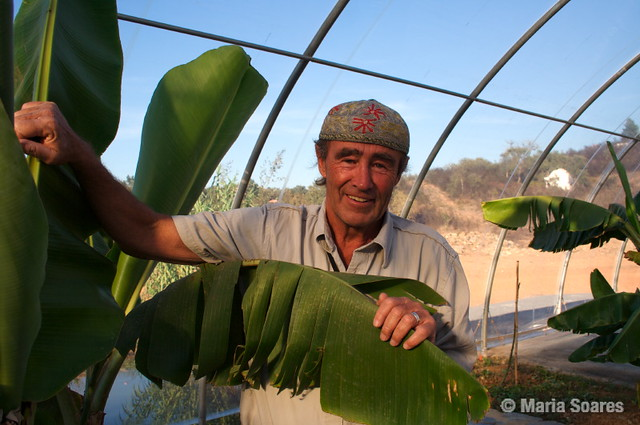
I thank the wonderful nature that inspires and excites me with its diversity and multifunctionality.
I wish for groups of young, pioneering individuals who, full of enthusiasm, found startups based on these and related concepts and thus become as successful as the “garage pioneers” of the digital age, but in an area with even greater potential for the development of humanity. And I
Thank you for your attention!
Jürgen Kleinwächter
Based on “The BIOTOPE® principle” by Jürgen Kleinwächter. Figures, estimates and future visions are presented as described in the author's original essay.